Crop and cultivation-goal assessment
Growth stage, production layout and operating targets inform the lighting brief.
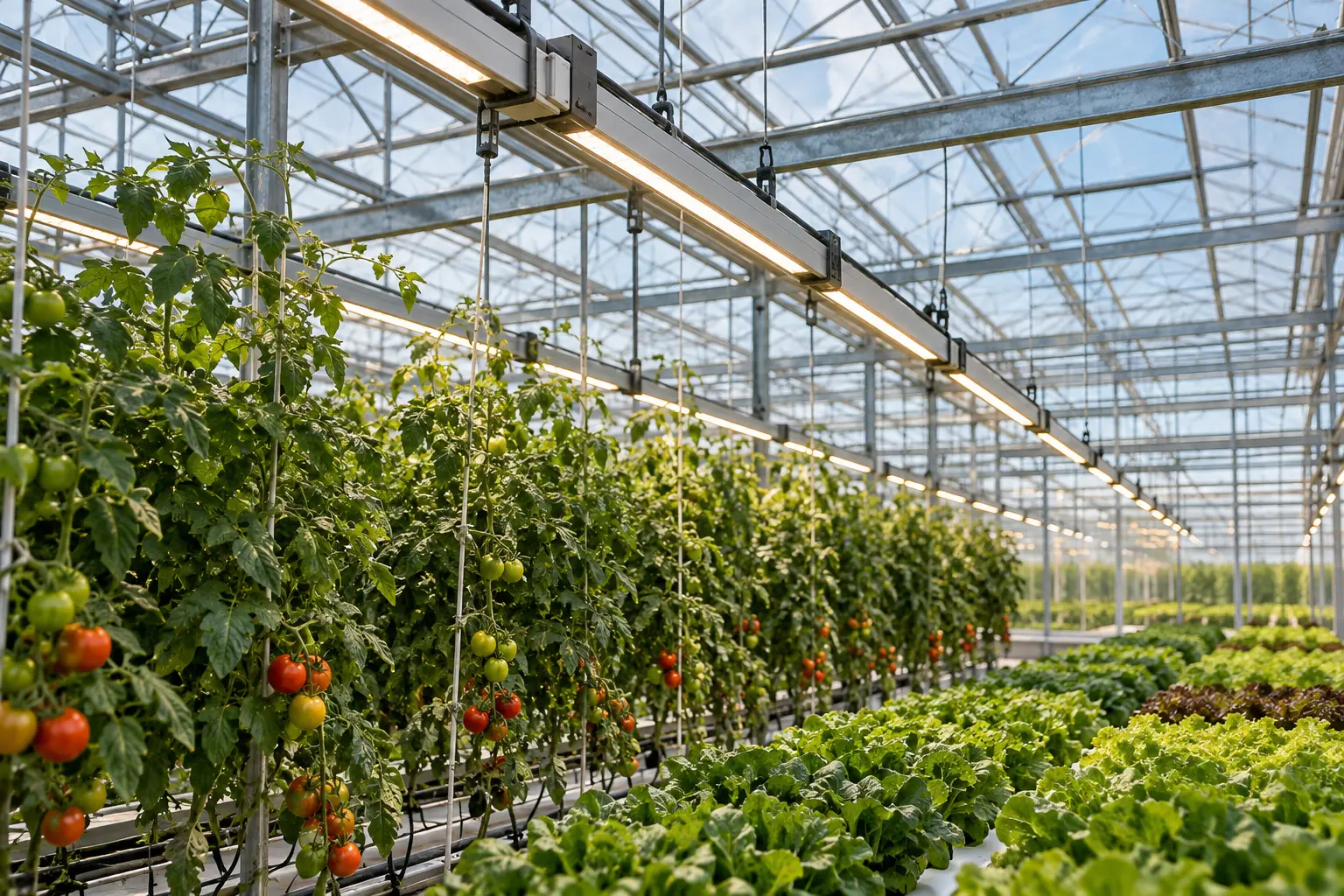
CROP-APPROPRIATE LIGHT, CONTROLLED ILLUMINATION
We design greenhouse LED lighting systems around the crop, natural-light conditions, target light level, photoperiod and cultivation layout.
Luminaire selection, layout, electrical infrastructure, dimming scenarios and zone control are assessed as one coordinated lighting system.
Horticultural lighting design starts by defining the crop’s needs at each growth stage. Greenhouse location, covering, orientation and seasonal daylight availability are assessed together. PPF describes the photosynthetic photon output produced by a luminaire, while PPFD relates to the photon density reaching the cultivation surface. DLI represents the total photosynthetic light received over a day. A greenhouse grow-light project therefore cannot be based only on luminaire wattage or lux.
Target PPFD and DLI are not fixed values for every crop. The plant, production stage, daylight contribution, photoperiod and operating goals are considered together. Spectrum is selected in the same context. Daily schedules may supplement periods when daylight is insufficient. Light sensors and automation can stage luminaire groups or dim them through compatible drivers.
Mounting height, spacing and optical distribution are modelled together to provide a balanced pattern over the cultivation surface. Greenhouse structure, suspension points, services and crop rows can create shadows. Layout planning accounts for these obstructions and maintenance access. The assessment considers uniformity across the production area as well as the average target.
Electrical supply, drivers, panel capacity, cable routes and zones are designed with the luminaire arrangement. Electrical load and heat released into the greenhouse interact with climate control and energy management. Depending on the luminaire and driver, DALI/DALI-2, 0–10 V or manufacturer-specific controls may be evaluated. After installation, groups, dimming levels and light distribution can be checked within the agreed project scope.
GREENHOUSE LED LIGHTING SYSTEMS
Growth stage, production layout and operating targets inform the lighting brief.
Location, greenhouse covering, season and daily light conditions are assessed.
Targets are defined for the crop, stage and daylight contribution.
PPF, spectrum, optics and mounting conditions are considered together.
Spacing, height and structural shadows are incorporated into the layout.
Supply, panels, cables, drivers and protection requirements are defined.
Luminaire groups, sensors, schedules and interfaces are coordinated.
Operating scenarios and suitable site checks are verified within scope.
CROP-APPROPRIATE LIGHT, CONTROLLED ILLUMINATION
Crop rows, growth phase, production calendar and light expectations are recorded.
Location, covering, structure, obstructions and seasonal contribution are reviewed.
PPFD, DLI, photoperiod and uniformity requirements inform the arrangement.
Optics, spectrum, electrical characteristics and compatible interfaces are specified.
Supply and support systems are installed; zones and sensors are connected.
Groups, dimming programs and distribution are checked under operating conditions.
The schedule is established after greenhouse area, light targets, electrical infrastructure, luminaires and controls are defined.
INTEGRATED GREENHOUSE TECHNOLOGIES
A powerful luminaire alone is not enough. Height, spacing, surface uniformity and structural shadows work together. Daylight-responsive dimming should coordinate lighting with greenhouse climate control and energy management.
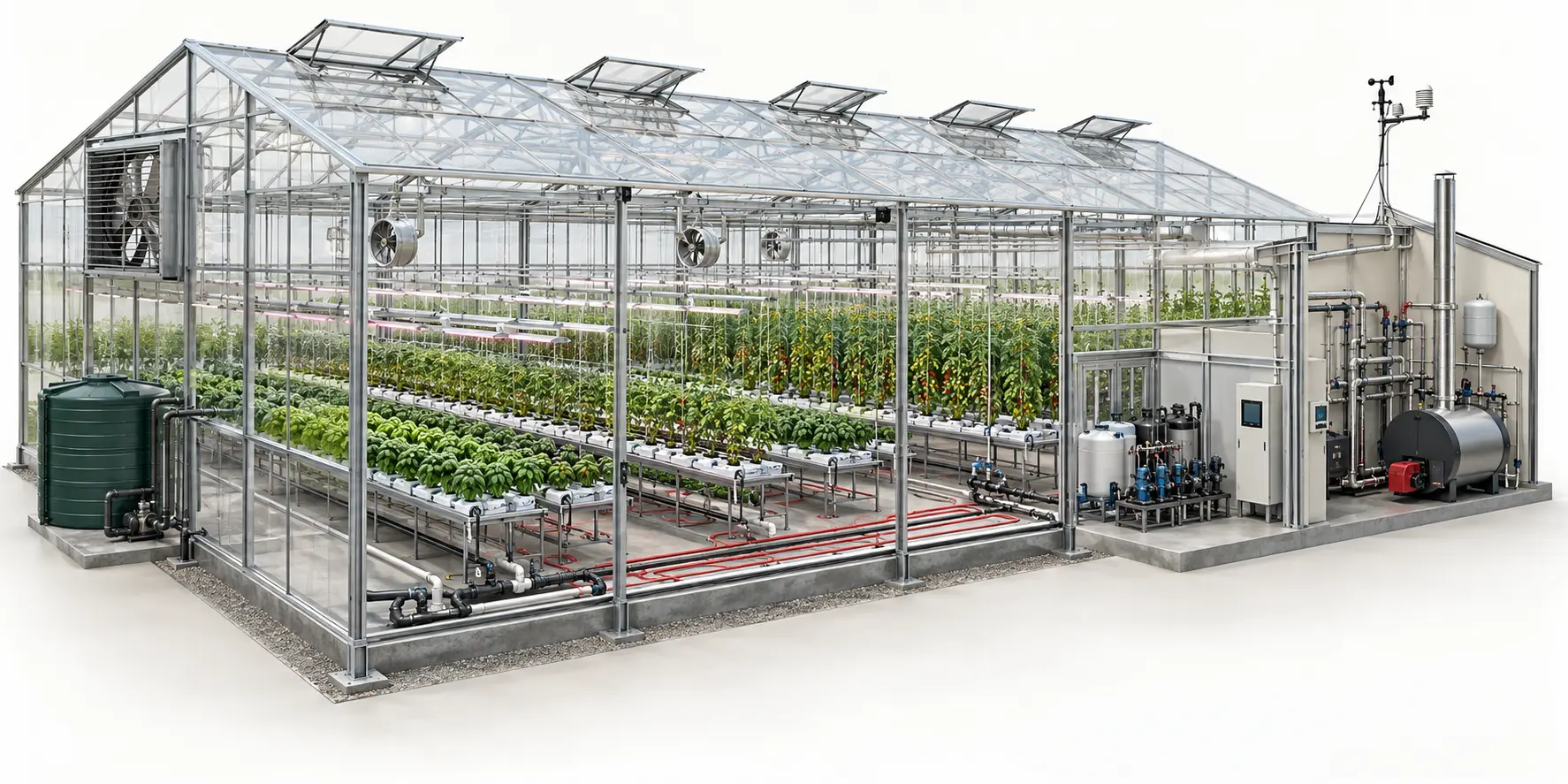
LED Lighting: Crop-specific light and spectrum control.
Luminaire, layout and control are selected by assessing the plant and greenhouse conditions together.
Not every solution is required in every project. Selection depends on crop, greenhouse structure, cultivation method, daylight and lighting needs.
Luminaires are placed above the cultivation area with suitable height and optics.
Considered where dense canopies call for light delivery within crop rows.
A controlled-environment sub-solution for close placement within stacked cultivation racks.
Compatible drivers allow output adjustment by schedule or sensor data.
Production areas can use independent luminaire groups and programs.
Suitable sensors can support staged switching or dimming against daylight.
Lighting automation creates a controlled sequence between measurement and the operating target.
Suitable light sensors monitor the daylight contribution entering the greenhouse.
The controller compares readings with defined photoperiod and lighting scenarios.
Zones switch on, switch off or dim when the driver infrastructure supports it.
Operating state, alarms and available consumption data are presented to operators.
Depending on the project and drivers, DALI/DALI-2, 0–10 V or manufacturer-specific control infrastructure may be evaluated.
Optics and layout are coordinated to manage distribution over the crop surface.
Sensors and schedules allow supplemental light to respond to natural contribution.
Production areas can have separate timing and dimming groups.
Supply, drivers and heat load are assessed with other greenhouse systems.
Layout is not based only on catalogue power. Verification methods and site-measurement scope are defined for each project.
Crop, stage, daylight, PPFD and DLI targets, photoperiod, layout and electrical infrastructure are assessed together.
PPF is luminaire photon output, PPFD is density reaching a surface, and DLI is total photosynthetic light received each day.
No. Lux is weighted for human vision; horticultural design also needs PPF, PPFD, DLI and spectrum.
Selection varies with crop, stage, layout, daylight, spectrum and control requirements.
Options follow review of structure, electrical capacity, mounting space, climate load and controls.
Compatible sensors, drivers and controls can stage or dim luminaires according to daylight.
Independent groups and schedules are possible when electrical and control infrastructure supports them.
Crop, stage, greenhouse dimensions, cultivation layout, daylight, electrical infrastructure and control expectations are required.
LET’S PLAN YOUR PROJECT
Share your requirements for a new greenhouse or an existing facility. Our technical team will contact you to develop a practical solution plan.