Sensors and Measurement
Infrastructure observes physical conditions and production variables.
Explore Technologies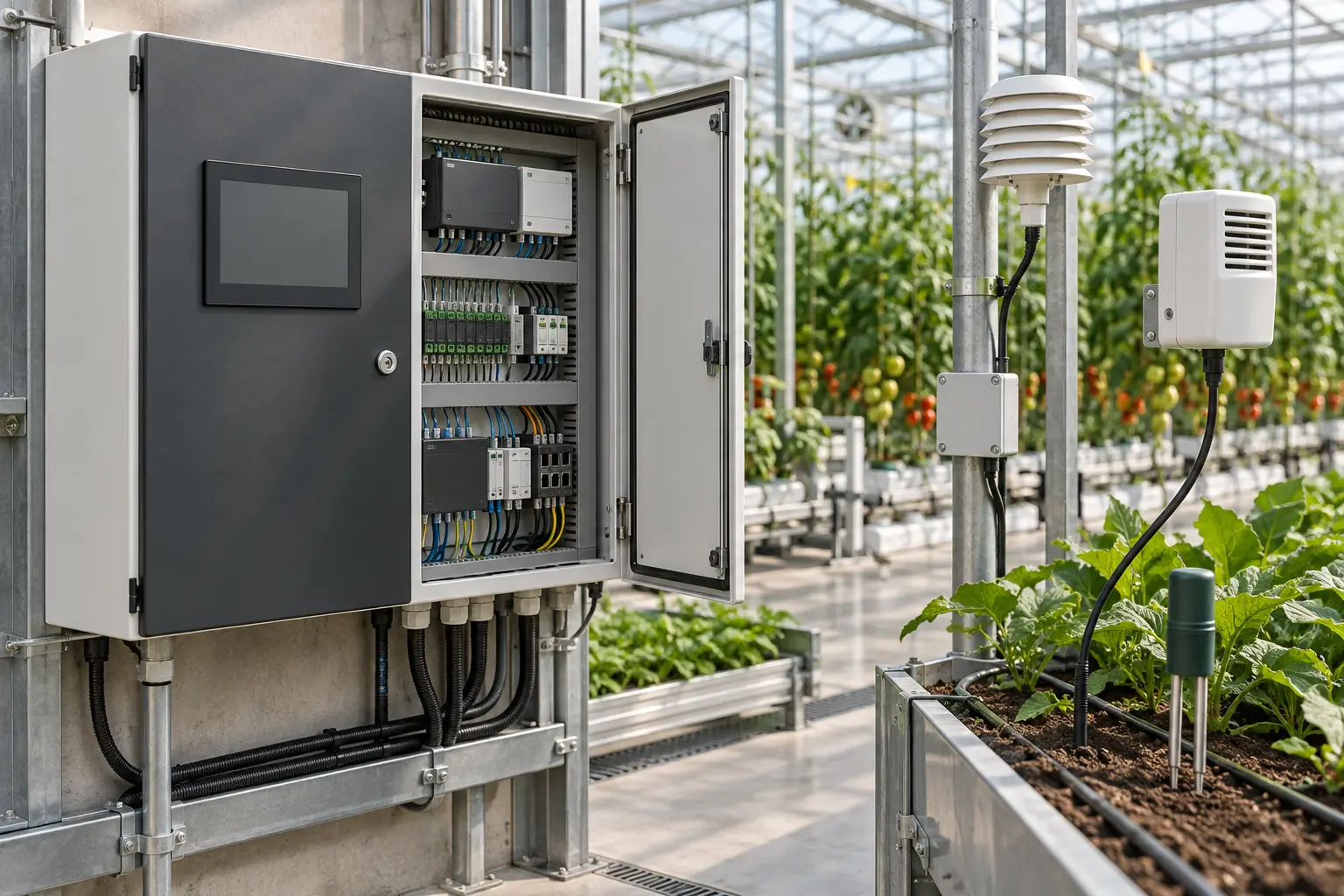
GREENHOUSE TECHNOLOGIES
From sensors and control panels to irrigation, climate, lighting, energy management and central automation, we coordinate how technical systems measure, communicate and respond. Technology is selected for project needs and equipment compatibility.
Not every project uses every measurement or device. Layers reflect the growing method, control objectives and selected architecture.
Physical equipment operates in the growing environment.
Sensors are selected around the method and control goals.
Hardware processes measurements and manages field commands.
Commands, measurements and alarms travel between compatible devices.
Local behaviour depends on the selected control architecture.
Selection is not a fixed package; it creates an appropriate, interoperable control structure.
Infrastructure observes physical conditions and production variables.
Explore TechnologiesPower, protection, commands and automation interfaces are organised.
Explore TechnologiesData is viewed in one interface and defined scenarios are applied.
Explore TechnologiesTemperature, humidity, ventilation and air movement are coordinated.
Explore TechnologiesZones, valves, pumps, tanks and dosing equipment are managed together.
Explore TechnologiesSchedules, zones and compatible dimming follow the production programme.
Explore TechnologiesMeasurements and events can be reviewed within the defined retention setup.
Authorised users may view status and receive notifications where infrastructure supports it.
Explore TechnologiesA sensor does not directly operate equipment; the measurement passes through defined control logic and safety conditions.
The sensor measures a physical value.
The controller receives the measurement.
It compares the value with a target or scenario.
The relevant equipment receives a command when conditions allow.
Status and events appear in the interface.
Configured systems record measurement and event history.
These are examples. Thresholds, delays, priorities and sequences are defined for the project.
Control priorities help coordinate opposing equipment actions.
Heat, water, light and air effects enter one design.
Compatible systems can be observed from one interface.
Panel, communication and capacity needs can consider later additions.
New facilities coordinate infrastructure from the outset. Existing facilities require compatibility review without assuming every device can be integrated.
The aim is not simply to choose the most advanced device, but to design an appropriate, operable and interoperable system.
Technology layers are applied at different depths according to each solution’s field requirements.
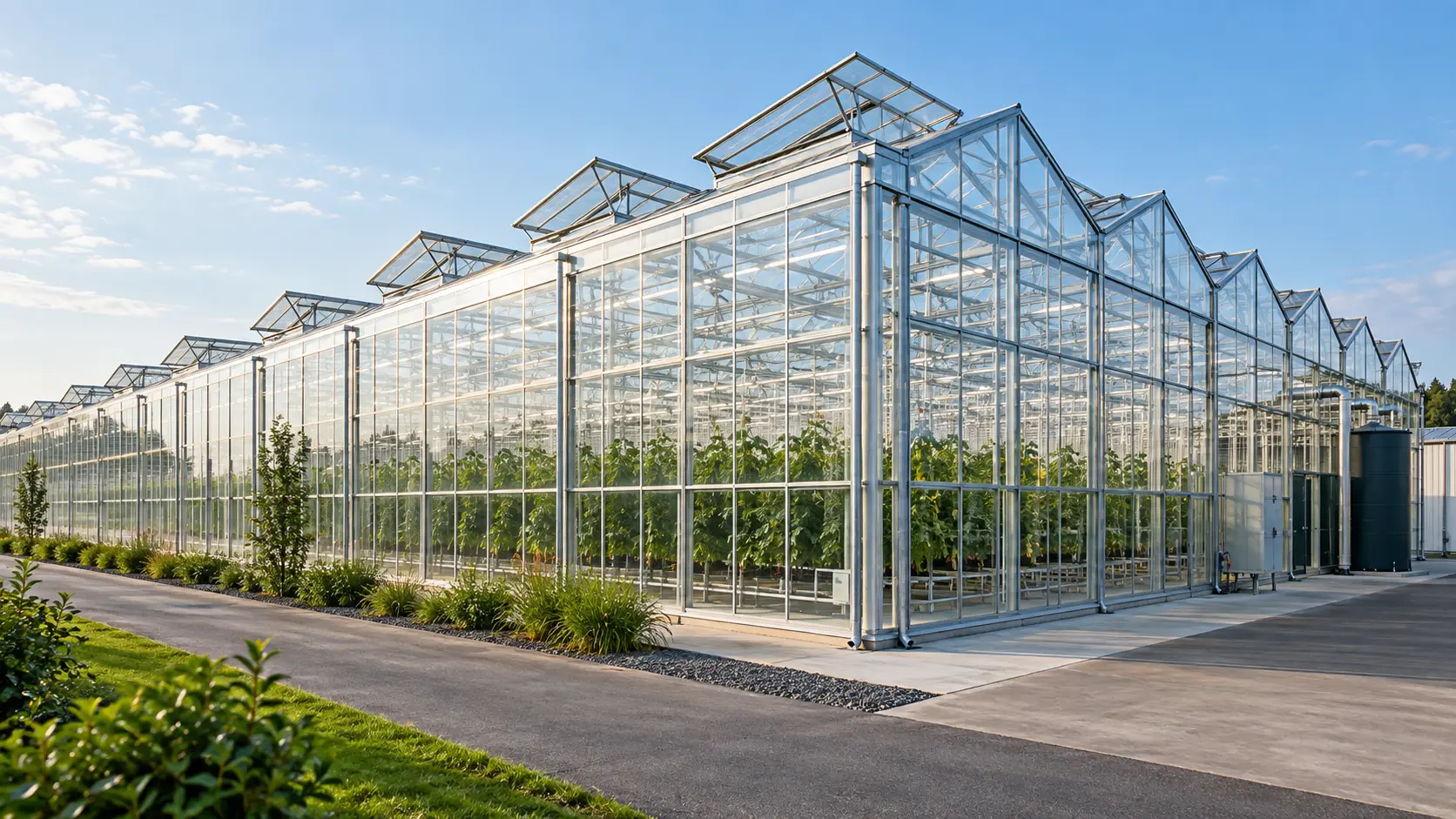
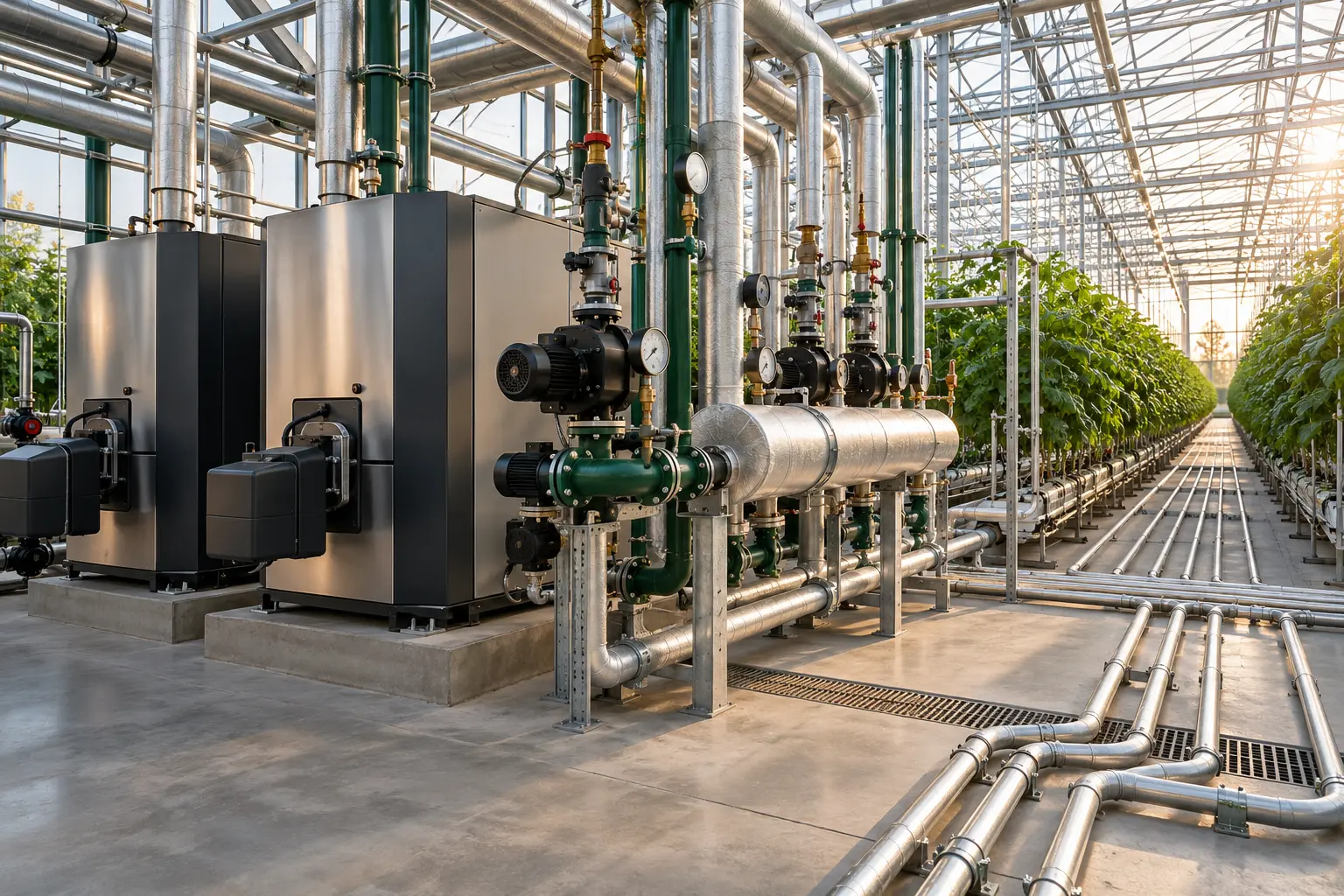
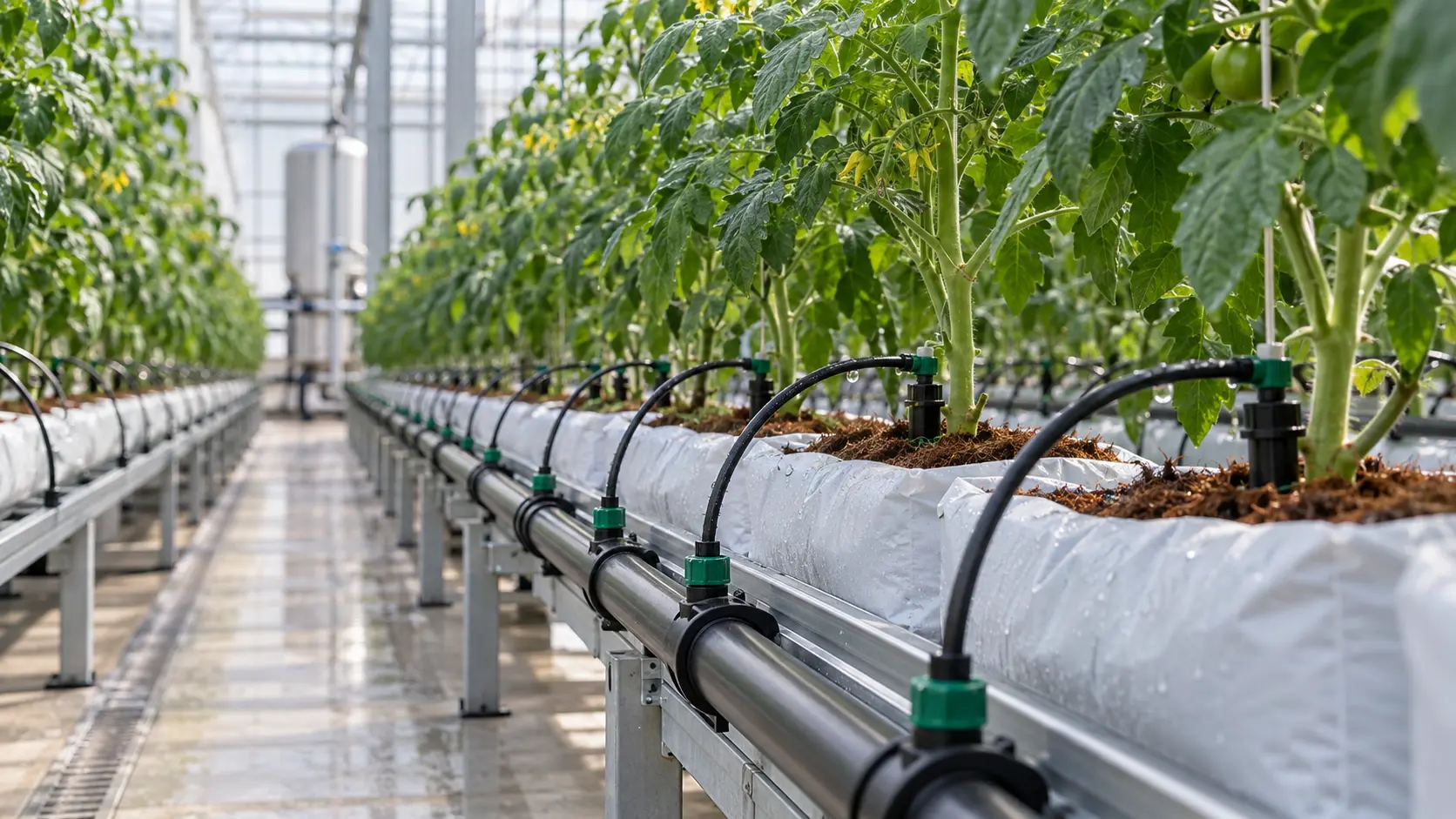
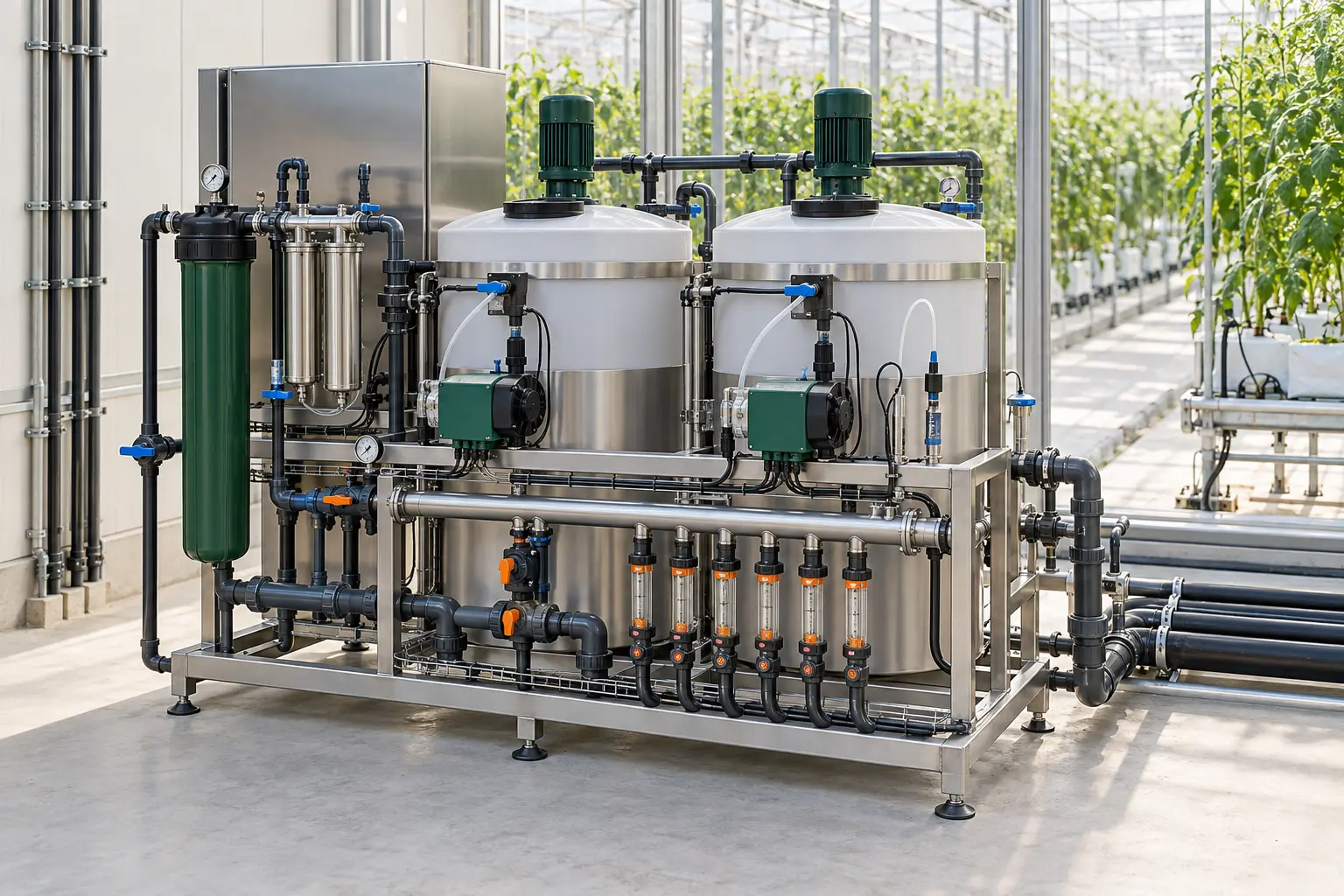
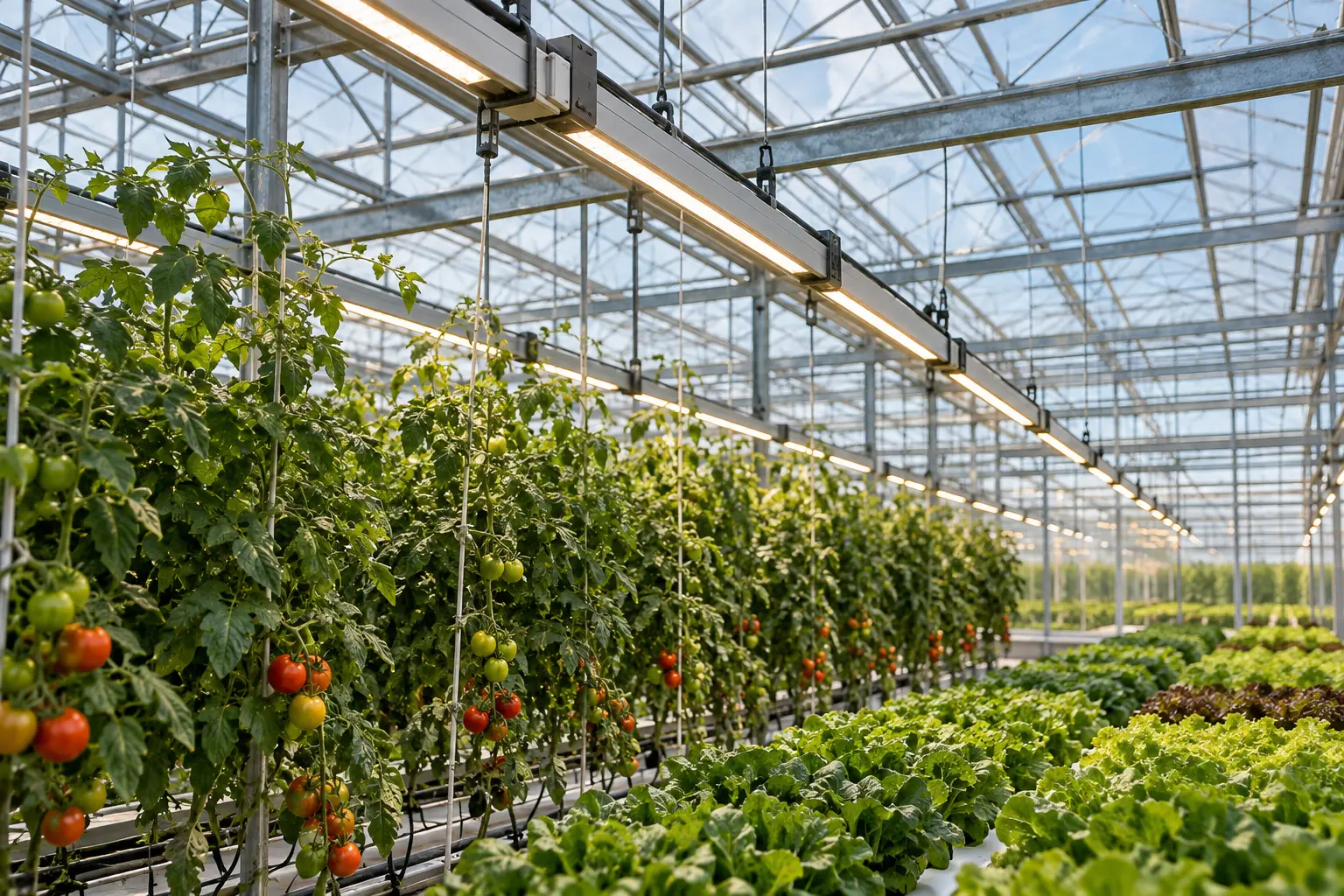
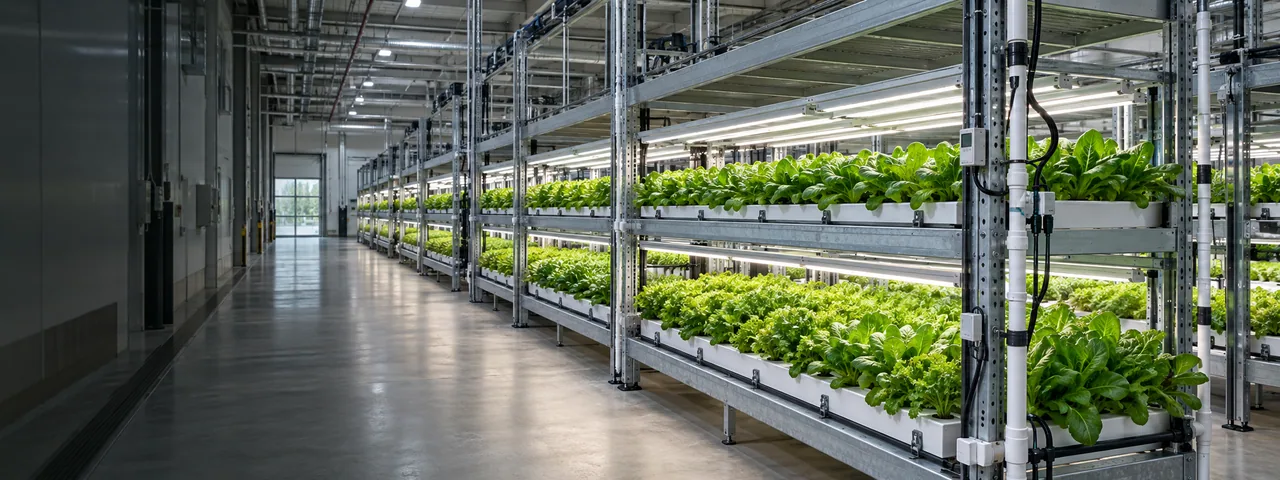
It is monitoring and control infrastructure that evaluates sensor data through defined logic and manages compatible field equipment.
Suitable options follow review of equipment, panels, field connections and communication compatibility.
Depending on scope: temperature, humidity, CO₂, light, water temperature, pressure, flow, level and root-zone values.
Systems with suitable interfaces can connect centrally; the scope depends on device compatibility.
Local behaviour depends on control architecture and programming and must be defined for the project.
Access method, permissions and network infrastructure are designed for the project; security depends on the architecture used.
Integration may be possible with compatible electrical and communication interfaces, but cannot be assumed for every device.
Production goals, equipment, operating method, data needs, infrastructure and budget are assessed together.
LET’S PLAN YOUR PROJECT
Share your requirements for a new greenhouse or an existing facility. Our technical team will contact you to develop a practical solution plan.