Crop and cultivation assessment
Soil, substrate or hydroponic production and the recipe structure supplied by the operation are reviewed.
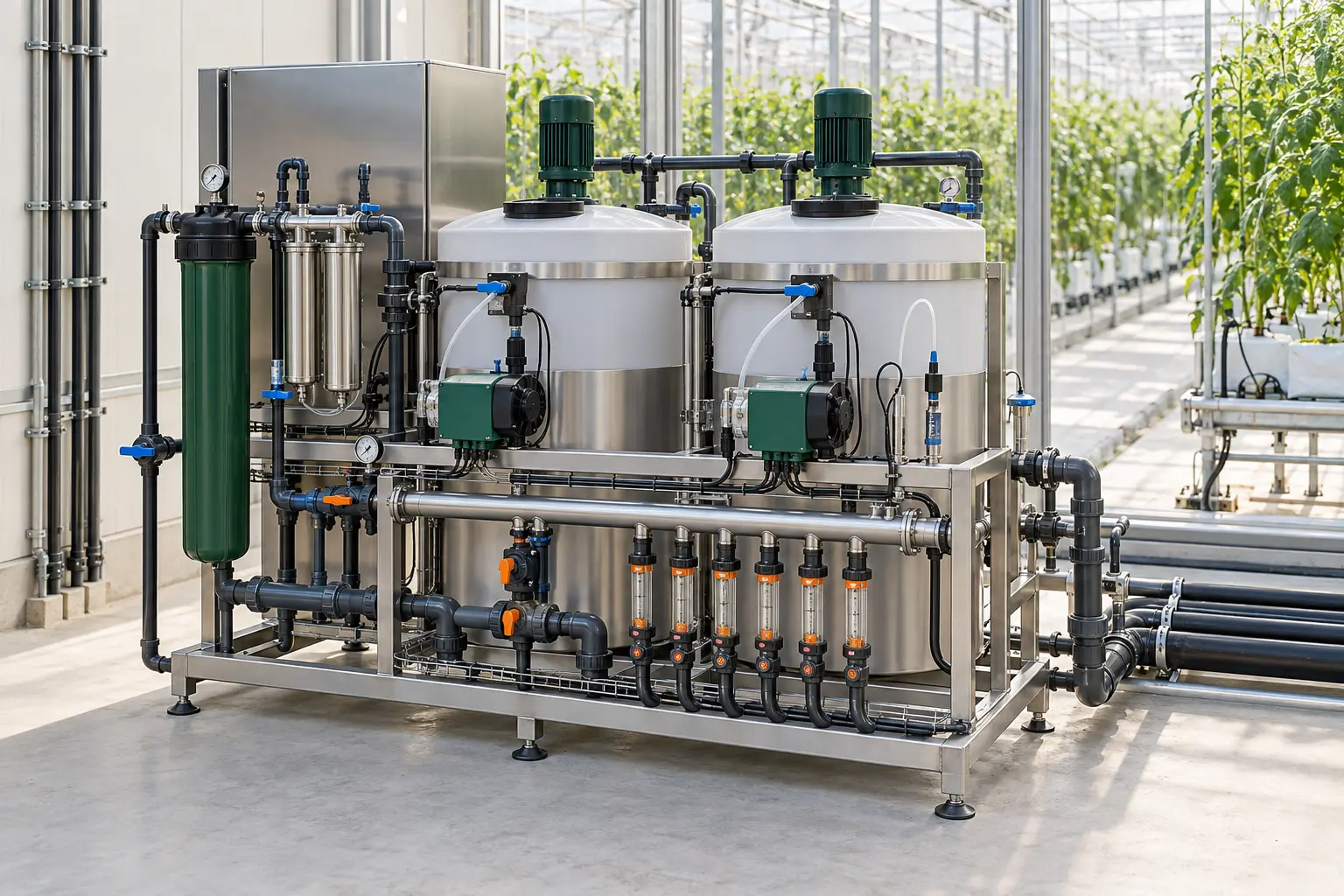
CONTROLLED NUTRIENT PREPARATION AND DOSING
We design greenhouse fertigation systems around the crop, cultivation method, water quality, irrigation zones and nutrient recipes to be applied.
From stock tanks and dosing pumps to EC and pH measurement and recipe automation, nutrient-solution preparation is assessed within one control structure.
Fertigation applies plant nutrients with irrigation water under a defined recipe and controlled process. Concentrated fertilizers are prepared as stock solutions, while components that may react are kept in separate tanks. A and B stock tanks can be accompanied by a separate acid or pH adjustment line when the project requires it. Equipment, wetted materials and separation are selected through appropriate specialist assessment to manage incompatibility, precipitation and safe operation.
Dosing pumps or another injection method suited to the project transfer stock solutions into the main mixing water. Target values come from recipes provided by the operation, grower or relevant crop specialist. The system does not create agronomic recipes; it is configured to apply supplied targets within defined technical limits and control scenarios. Water quality and starting EC and pH values provide essential inputs for measurement and dosing design.
EC and pH sensors measure the prepared solution in the mixing unit. The controller compares readings with recipe targets and manages the appropriate dosing equipment. Separate recipes or schedules may be assigned to irrigation zones serving different crops or growth stages. The finished nutrient solution then enters the irrigation distribution system. Fertigation prepares and doses nutrients, while irrigation automation carries the solution to the selected zones.
Repeatable operation depends on regular calibration of probes and dosing equipment. Alarms may cover tank level, measurement range, flow status and EC or pH values outside set limits. Records help operators review programs and measured conditions. During commissioning, sensors, dosing lines, recipe changes, interlocks and alarm scenarios are tested together with the site’s safe operating procedures.
GREENHOUSE FERTIGATION SYSTEMS
Soil, substrate or hydroponic production and the recipe structure supplied by the operation are reviewed.
Starting EC, pH and relevant analyses inform the preparation and measurement approach.
A/B separation, dedicated lines, access and mixing sequence are defined.
The method is assessed against flow conditions, control range and system capacity.
Probes, measuring points and control ranges are selected for project conditions.
Supplied targets are assigned to the appropriate zones and operating schedules.
Operator screens, warnings and the required record structure are planned.
Sensors, dosing lines, recipes and safety scenarios are verified before operation.
CONTROLLED NUTRIENT PREPARATION AND DOSING
Crop, method, zones, existing irrigation and operating expectations are recorded.
Analyses and targets supplied by the grower, operation or relevant specialist are reviewed.
Separation, injection method, sensor points and process flow are defined.
Compatible tanks, pumps, valves, probes, controllers and alarms are specified.
The preparation unit is connected to existing or new distribution through controlled interfaces.
Measurements, dosing response, recipe changes, logging and alarm scenarios are tested.
The project schedule is established after water analysis, recipe structure, existing infrastructure, site and equipment scope are reviewed.
INTEGRATED GREENHOUSE TECHNOLOGIES
A correct recipe alone is not enough. Stock tanks, dosing equipment, EC and pH sensors and irrigation zones must work together. Fertigation prepares the nutrient solution; irrigation automation distributes it to the assigned zones. Alarms and operator oversight keep both roles traceable.
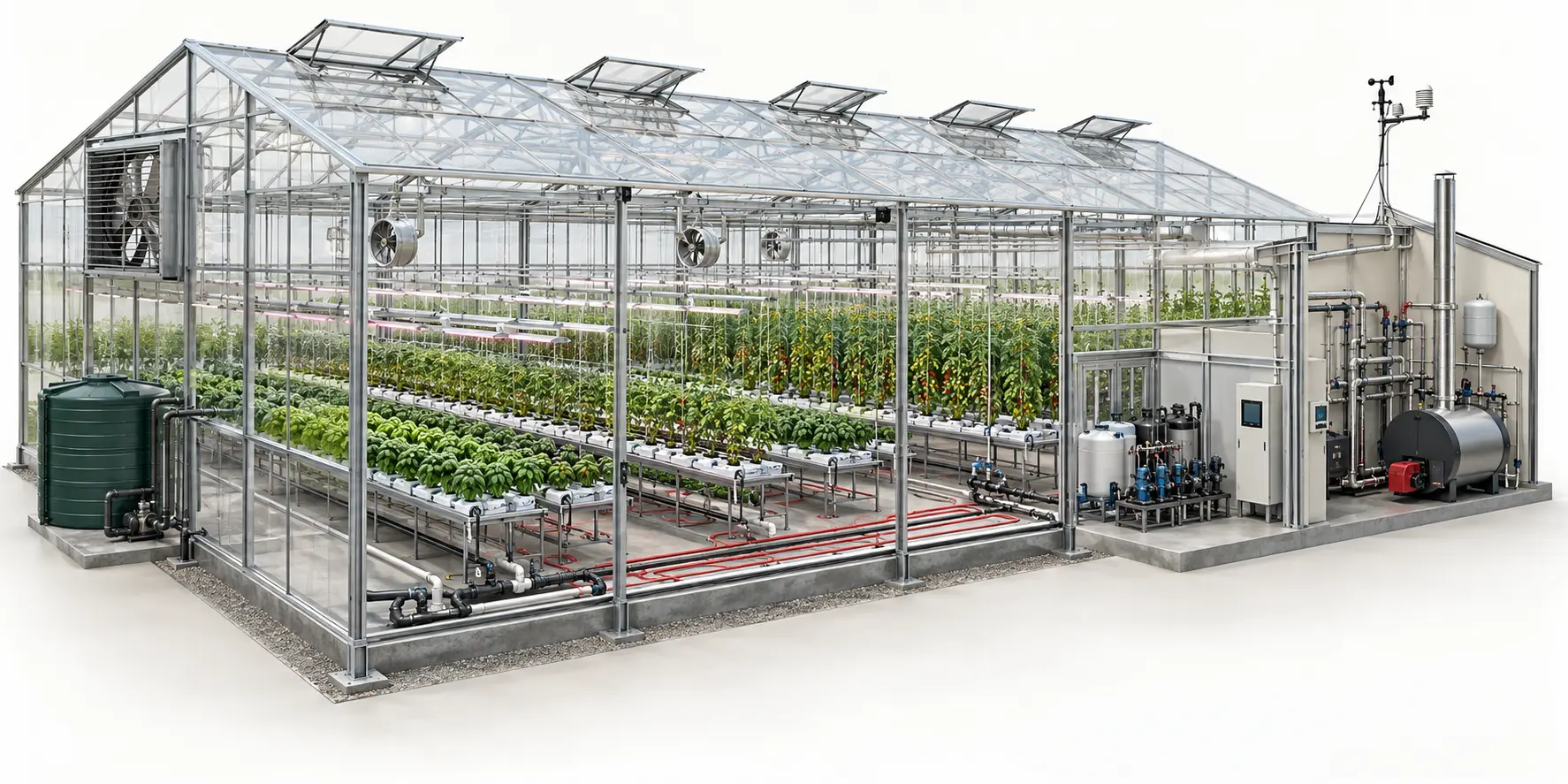
Fertigation System: Controlled nutrient preparation and dosing.
System architecture is selected by evaluating production data and the technical requirements of recipes supplied by the operation.
No option fits every project. Selection depends on cultivation method, capacity, water quality, recipe structure and control needs.
Separate storage and suction arrangements are planned for incompatible concentrates.
Dosing pumps manage nutrient lines for the required flow and control range.
Venturi is considered only when hydraulic conditions and control needs are suitable.
Sensors and controls compare measured solution values with supplied targets.
Preparation, application and any return-water strategy are coordinated with the production system.
Defined recipes, schedules and zone assignments are managed through central control.
It supports applying defined recipes through consistent control steps.
Operators can follow measured solution values during operation.
Programs can be assigned to different production areas.
Out-of-range conditions become visible and operating history can be reviewed.
Safe, sustainable operation depends on accurate measurement, compatible wetted components and practical access for inspection, cleaning and maintenance.
It is a technical system that doses plant nutrients into irrigation water under defined recipe and control values.
Injection equipment transfers stock solutions into mixing water while sensors and controls monitor supplied targets.
They help compare the prepared solution with defined targets and make conditions visible to the operator.
They separate concentrated components that could react and form precipitates if combined.
Integration options can be identified after flow, pressure, zones, controls and material compatibility are reviewed.
Yes. Preparation, measurement and any return-water strategy are designed for the hydroponic arrangement.
Separate recipes or schedules can be assigned when the control and process architecture supports them.
Crop, cultivation method, water analysis, flow, zones, recipe structure, existing equipment and control needs are required.
LET’S PLAN YOUR PROJECT
Share your requirements for a new greenhouse or an existing facility. Our technical team will contact you to develop a practical solution plan.